Blog post content
Mystery & Mini Monsters: Amazing Fun Facts for Curious Kids!
Do you love solving mysteries, discovering strange creatures and finding out things that make you say, “WOW!”?
Then grab your imaginary magnifying glass 🔍, switch on your detective brain 🕵️ and get ready to investigate!
To celebrate our Mystery & Mini Monsters weekly theme at Barracudas October half-term camps, we've collected some fascinating, funny and slightly spooky facts about animals, nature, history and the mysteries hiding all around us.
How many do you already know?
🐙 1. An octopus has THREE hearts!
Here's a fact that sounds completely made up, but isn't!
An octopus has three hearts. Two pump blood to its gills, while another pumps blood around the rest of its body.
And that's not the only unusual thing about an octopus. Its blood is blue, rather than red like ours!
Mini mystery: 🕵️ Can you find out why octopus blood is blue?
🕸️ 2. Spider webs are surprisingly strong
Eek! A spider! 🕷️
Before you run away, take a closer look at its web. Spider silk is an incredible natural material that's both strong and stretchy.
Different spiders also create different types of webs. Some make the classic spiral-shaped webs you might spot sparkling with dew on an autumn morning, while others build tunnels, sheets or tangled webs.
Try this: 👀 Next time you're outside, count how many different spider webs you can find. Don't touch them though, somebody might be home!
🦇 3. Bats aren't blind
You've probably heard someone say "blind as a bat", but bats aren't actually blind!
Bats can see, and many also use an amazing skill called echolocation. They make high-frequency sounds and listen to the echoes bouncing back from objects around them. This helps them work out where things are, even in the dark.
It's a little like having a superpower!
Mini challenge: 👂 Close your eyes and listen carefully for 30 seconds. How many different sounds can you identify?
🍂 4. Leaves contain hidden colours
Why do leaves turn yellow, orange and red in autumn? 🍁
The answer has been hiding inside them all along!
Leaves contain a green pigment called chlorophyll, which helps plants use sunlight to make food. As the days become shorter and colder in autumn, trees stop producing as much chlorophyll.
As the green fades away, other colours that were already in the leaf can become visible.
So those beautiful autumn colours aren't always appearing from nowhere – some were hiding underneath the green!
🐌 5. Snails have thousands of tiny teeth!
Don't expect to see a snail grinning at you with thousands of pearly whites. 🐌
Instead of teeth like ours, many snails have a special ribbon-like structure called a radula, covered in lots of tiny tooth-like structures. They use it to scrape up their food.
Suddenly, the humble garden snail seems a little more monstrous!
Question: 🔎 What other mini beasts can you find in your garden or local park?
🦉 6. Owls can't roll their eyes
Owls have enormous eyes, but there's something unusual about them: they can't move their eyes around in their sockets like we can.
Instead, an owl turns its head to look in different directions.
And no, an owl can't turn its head all the way around! Some owls can rotate their heads by up to about 270 degrees, which is still pretty impressive.
Try looking behind you without moving your shoulders. Definitely don't try to compete with an owl!
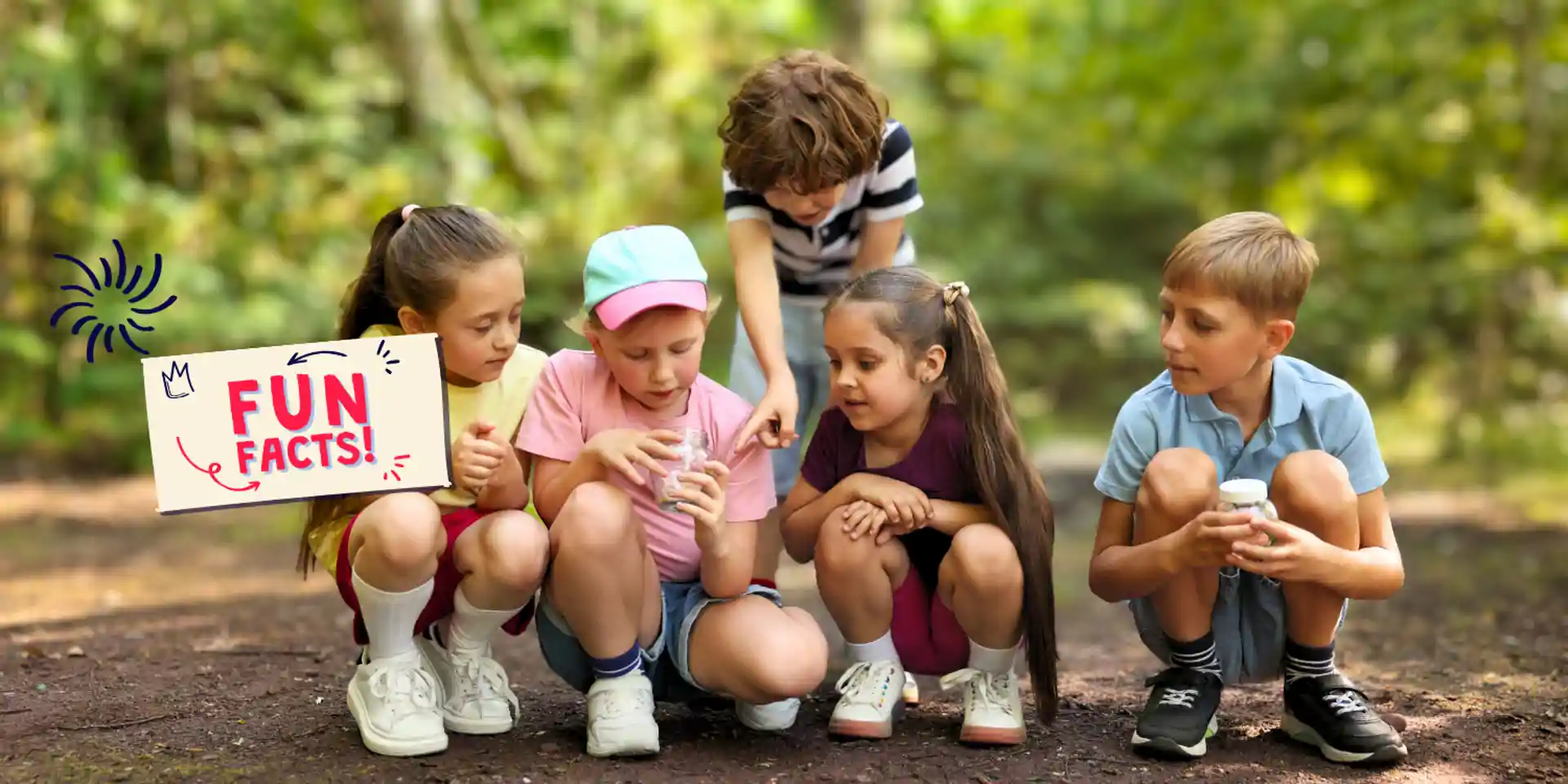
🐾 7. You can become an animal detective
You don't have to actually see an animal to discover that it's been nearby.
Animal detectives look for clues such as:
🐾 footprints
🪶 feathers
🥜 nibbled nuts and seeds
🕸️ webs
🪹 nests
🕳️ burrows and holes
Autumn is a brilliant time to head outside and investigate.
Detective challenge: 🔍 How many signs of animals can you find on your next woodland walk?
Remember: observe wildlife without disturbing its home.
🦔 8. Hedgehogs prepare for a VERY long sleep
As winter approaches, hedgehogs need to build up enough energy to survive hibernation.
During hibernation, their body temperature drops and their heart and breathing rates slow dramatically, helping them save energy when food is difficult to find.
And here's a particularly cute fact: a baby hedgehog is called a hoglet. 🦔
👻 9. There's science behind some "spooky" sounds
Creak... rustle... WHOOSH! 😱
Did you hear that?
Autumn evenings can produce plenty of mysterious noises, but there's usually an explanation.
Wind can squeeze through tiny gaps and make whistling sounds. Tree branches can scrape against buildings. Pipes can creak as temperatures change. And nocturnal animals become active while we're settling down for the night.
So next time you hear a mysterious sound, don't assume there's a monster under the bed.
Put your detective skills to work and investigate!
🎃 10. Pumpkins are fruits!
Here's one you can use to trick your friends: a pumpkin is a fruit. 🎃
In botanical terms, fruits develop from a flower and contain seeds, and pumpkins do exactly that.
Even more surprisingly, pumpkins belong to the same plant family as cucumbers, melons and courgettes.
That's one strange-looking fruit salad!
🐦 11. Some birds can recognise human faces
Think that bird isn't paying attention to you? Think again!
Research has shown that some birds, including crows, are capable of recognising individual human faces.
Crows are particularly clever birds. They can solve problems, use tools and remember information. Apparently, they can also bear grudges, so treat them well!
Maybe we should be calling them Detective Crow. 🕵️♂️🐦
🦎 12. Some animals can regrow body parts
Imagine losing part of your body and simply growing another one!
Some animals have remarkable powers of regeneration. Certain salamanders, for example, can regrow lost limbs.
Sea stars can also regenerate damaged arms, although exactly what they can regrow varies between species.
Nature really does have some extraordinary "mini monsters". 🌿
🕵️ Can You Solve These Mini Mysteries?
Ready to test your detective skills? Try these with the family.
Mystery 1: I have eight arms, three hearts and blue blood. What am I?
Mystery 2: I fly at night and use echoes to help find my way. What am I?
Mystery 3: I have thousands of tiny tooth-like structures but move very, very slowly. What am I?
Mystery 4: I'm orange, full of seeds and often mistaken for a vegetable. What am I?
Mystery 5: I'm awake at night, have huge eyes and can turn my head much further than you can. What am I?
Answers: Octopus 🐙, bat 🦇, snail 🐌, pumpkin 🎃 and owl 🦉.
How many did you get right?
🍂 Become an Autumn Detective
There's mystery everywhere once you start looking for it.
Head outside with an adult and see what you can discover. Look underneath fallen leaves without disturbing wildlife, examine a spider's web, hunt for animal tracks, collect colourful leaves or see how many different birds you can spot.
You could even make a Mystery & Mini Monsters nature journal and draw or write down everything you discover.
The best detectives always record their clues! 🔍
👾 Discover Mystery & Mini Monsters at Barracudas
This October half term, we're bringing Mystery & Mini Monsters to Barracudas!
Children can expect a fun-filled week where our theme inspires special twists on activities, challenges and creative fun alongside the huge variety of activities they already enjoy at camp.
And there's plenty of choice. With six activity sessions each day and a choice at every session, children can create a day packed with the things they enjoy.
Our October camps are designed for children aged 4–14, so whether they're a curious little investigator, an energetic adventurer, a creative problem-solver or simply love trying something new, there are plenty of opportunities to join the fun.
Ready to uncover the mystery? 🔍
Find your nearest Barracudas October half-term camp and join our Mystery & Mini Monsters adventure!